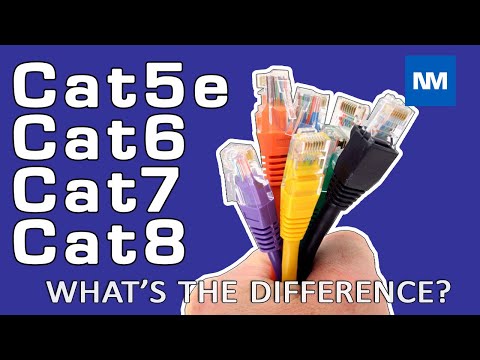
Ever felt lost in a sea of network cables? You’re not alone! Honestly, it’s like navigating a jungle without a map. Let’s chat about Cat5e, Cat6, and Cat7—those mysterious cables that keep the internet flowing.
So what’s the deal with these numbers? Well! Each has its own quirks and perks. It’s kinda like choosing between different types of pasta… or shoes. They all look similar but have those little differences that really matter.
Remember when you tried upgrading your internet and your buddy mentioned something about cables? You scratched your head and nodded along, pretending to get it. Yeah, we’ve all been there.
Let’s break it down together! Understanding these cables can be less confusing than we think—and maybe even make you feel like the home network guru you were always destined to be!
Distinguishing Features of Cat5, Cat6, Cat7, and Cat8
Oh, you’re curious about the world of Ethernet cables? I get it! It’s like those stacks of cables behind your TV, right? So let’s see how these Cat cables can be so special and different from each other.
- Cat5: Seriously, this one’s been around forever. It supports speeds up to 100 Mbps and goes up to 100 meters in length. Basics for most folks at home, doing basic stuff online.
- Cat5e: The “e” stands for enhanced. It’ll speed you up a bit more, with support for gigabit speeds—up to about 1 Gbps. Not bad if you’re streaming a movie or need smoother browsing.
- Cat6: Moving into higher uploads and downloads? Cat6 is your buddy here. It handles up to 10 Gbps but only over shorter distances—like around 55 meters before things start slowing down.
- Cat7: Got a small business or maybe doing some heavy-duty gaming or video editing? This bad boy supports up to 40 Gbps over even shorter distances but offers better shielding against interference.
- Cat8: Alright, if you’re into the best of the best, Cat8 has got you covered at whopping speeds of 25-40 Gbps! Perfect for data centers needing lightning-fast transport over shorter runs—say no more than about maybe…30 meters?
Of course there was this one time when my friend insisted his fancy Cat6 cable would make his emails download faster…even on his slow internet connection! That gave us all quite the laugh!
The takeaway? Choose what fits your needs: better shielding, higher speeds, or longer lengths depending on whether it’s Netflix streaming night at home or keeping an entire office connected efficiently.
Remember all these cables have their quirks and differences are rooted in how they’re constructed inside—the guts you don’t see but matter a ton! Feel free say goodbye those buffering woes by picking right cable match for whatever digital feats await next time!
Cat6 vs Cat7 vs Cat8 Distinctions
Certainly! Let’s get into the whole Cat6, Cat7, and Cat8 thing to help you better understand what makes them different. You’ll learn which cable might suit your needs just perfectly.
Understanding the Basics:
Firstly, a quick snapshot of these cables: they’re all twisted pair cables used for Ethernet. The higher number generally means newer technology, better performance, but not always necessary for everyone.
- Cat6: This is kind of your go-to cable for most home networks today.
- Cat7: Now, with this one you step into more advanced territory. It supports up to 10 Gbps too but can handle it over longer distances (up to 100 meters) due to its shielding that’s designed to reduce interference from other cables. Think of it as getting a little extra peace of mind with heavy-duty tasks.
- Cat8: This is the new kid on the block—super fast and suitable for professional environments with monumental data transfer requirements. We’re talking speeds up to an insane 25-40 Gbps! Perfect for super-efficient data centers or high-performance installations.
Cable Shielding:
One area where they differ lies in how well they’re shielded against interference. Like I mentioned earlier:
– **Cat6** generally has less shielding.
– **Cat7** doubles down with its foil shielding around each pair.
– **Cat8** amps it up even further with additional layers!
Your Everyday Use Case:
For casual internet browsing or streaming? You’re probably fine sticking with good ol’ Cat6 unless your demands ramp up in near future!
Here’s a personal anecdote: My friend runs his small business from home using a mix of Cat6 and some crazy techy items he’s got from his IT job! But when expanding his workspace (and loads more devices), switching part of it out eventually turned out easier than initially thought coz he’d already been eyeing those fancy features offered by later versions.
Remember that each cable also comes at different price points—consider if all those bells n’ whistles are really necessary before splurging! You know?
In essence: your choice boils down not only on speed requirements but distance considerations tew… So weigh those elements carefully while keeping potential future expansion plans buzzing about headspace 😉
Key Network Differences: Cat5e, Cat6, and Cat7
Alright, let’s dive into the world of network cables. If you’ve ever wondered about the differences between Cat5e, Cat6, and Cat7 cables, you’re not alone. They might sound like mysterious technical terms, but they are actually pretty crucial when it comes to connecting all your gadgets.
First up: Cat5e. It’s an enhancement over the original Cat5 cable – that’s what the ‘e’ stands for, “enhanced.” This cable type is quite popular because it’s reliable and gets the job done for most basic networking needs. It supports up to 1 Gigabit per second (Gbps) speeds at 100 MHz bandwidth. For most home networks, this is pretty much sufficient unless you’re heavily into streaming high-quality video from multiple devices.
Now onto Cat6. Think of it as a step up from Cat5e. It can handle higher data rates – moving up to 10 Gbps for distances around 55 meters and operates at a bandwidth of 250 MHz. Why does this matter? Well if you’re running a business or need a fast-speed network setup with more stability across slightly longer distances, Cat6 might just be worth grabbing.
Then we’ve got Cat7. This one’s like bringing out the big guns in your networking setup. It boasts some beefed-up shielding to reduce interference and supports frequencies of up to 600 MHz! Talk about serious data handling! You can hit that sweet spot of 10 Gbps speeds even over longer distances – think consistent speed across those sprawling office spaces or fancy smart homes.
Here’s something interesting: While
Bottom line is understanding these differences helps set realistic expectations when picking out new gear for your network setup; plus knowing exactly what kind of performance you can expect makes life easier doesn’t it?
Picture this: It’s kinda like upgrading your car from an entry-level model (Cat5e) all way through mid-range (Cat6) and eventually hitting luxury tier (Cat7). Each has its place depending on budget needs desires whatever floats proverbial boat there!
So yeah deciding which category fits depends largely upon individual requirements space constraints future-proofing ambitions cost considerations sure makes decision less daunting informed choice now doesn’t hurt right?
Have you ever had one of those days when your internet decides to play hide and seek, leaving you high and dry right in the middle of a binge-watching session or a video call? Oh, the frustration! That’s when the type of ethernet cable pulling the strings behind your connection comes into play. So there’re Cat5e, Cat6, and Cat7 cables. These might sound like different gaming levels, but they’re actually all about speed and performance.
Now picture it this way: back in the day—well, not too long ago—Cat5e was like that reliable old car that got you from A to B without fail. It did its job decently with speeds up to 1 Gbps over short distances (think around 100 meters). You could stream music or download files without pulling your hair out.
Then along came Cat6 to switch things up. Imagine upgrading to a mid-range sedan—it’s smoother on highways and handles those bends better! With bandwidths jumping to 10 Gbps over shorter distances (around 55 meters), it’s perfect for home offices where data traffic is on the rise. The shielded versions even tackle interference like pros at ping-pong.
And here’s where Cat7 steps onto the scene—it’s as if you swapped that sedan for a shiny sports car! Capable of speeds up to 10 Gbps over longer distances (up to 100 meters), it’s all about sturdy shielding making sure signals don’t lose their cool crossing paths with other electrical gadgets. If power users were kings, this would probably be their crown jewel.
But before rushing out for super-speedy cables remember: your actual internet speed depends on various factors including service providers equipment compatibility house setup… oh boy! Choosing between these feels almost personal no? Each one has its charms depending what suits you best.
At end-of-day whichever path leads smoother video calls faster downloads fewer glitches hey happy surfing friends—may bufferings beware as silky ethereal signals pulse effortlessly through connected world below us every moment feeling infinitely magical somehow don’t ya think?